Python1
claudegpt
Plan. Challenge. Build. Verify.
Planning, challenge, implementation and independent verification across Claude Code and Codex.
My maintained MIT adaptation of Chase AI’s claudex-loop.
 Vishal Punia · AI-Native Systems Engineer
I lead up to 29 AI agents at once. I own the architecture, delegate the work and deliver complete platforms. From the first data model to a running product.
On October 2, 29 agents worked simultaneously across four packages of the Verselo platform. I connect architecture, assignments, reviews and integration.
My workshop skill captures behaviour, boundaries and acceptance criteria. Fable Architect is my architecture and challenge workflow. It breaks down the build so every worker receives a concrete assignment.
For your team: clear ownership and an outcome you can accept against a specification.
Builders implement. Fixers resolve findings. Claude subagents handle bounded tasks. Four worktrees separate the packages. Every implementation assignment includes its tests.
For your team: independent parts move forward together within one architecture.
An independent reviewer examines the code with fresh context. Findings return through the orchestrator to the responsible worker. Fix, test and review again form the feedback loop.
For your team: changes are examined before they become part of the product.
I integrate the packages, resolve conflicts and validate the combined code locally. CI and a controlled release follow. My agents deliver components. I deliver the system.
For your team: one person owns the whole result, until the pieces work together.
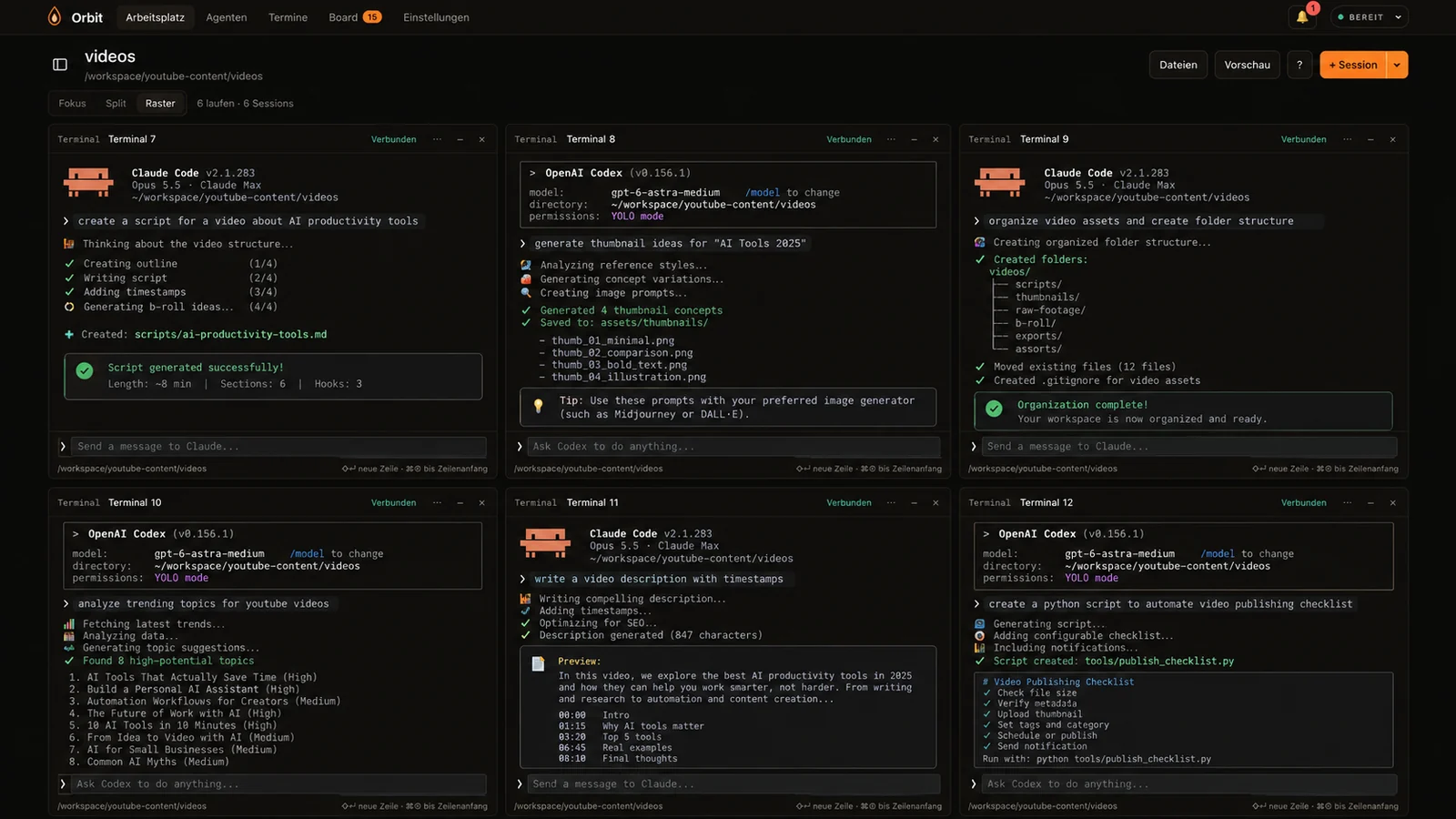
Four worktrees. Four work packages. 23 Codex workers and six Claude subagents working simultaneously. The session logs record the split.
This is how I work at scale: the platform has eight days with at least ten agents active simultaneously. A total of 2,064 agent runs sits behind this product.
A failed deletion task needed to resume correctly on retry. The fix passed its checks. Meanwhile, another change took the same migration number. I resolved the ordering, corrected an overly restrictive test and ran the combined build through the checks again.
15 successful CI jobs. 12,320 database assertions passed. The change was merged.Excerpt from the original assignment. Internal paths and function names omitted.
Fix at the root, in a new migration after main's newest: a reclaimed failed request must return to 'deleting' under the lease [...] check every guard in the purge chain [...] for the same state assumption.

[...] first purge attempt forced to fail [...] then a reclaim completes the deletion.

Run typecheck, lint, format:check, unit tests, build, repo-guard.
The work is finished when the product works, not when a branch is ready.
Eight public repositories. Agent orchestration, video, media, websites and local speech recognition. Open the code, read the decisions and inspect the tests.
Plan. Challenge. Build. Verify.
Planning, challenge, implementation and independent verification across Claude Code and Codex.
My maintained MIT adaptation of Chase AI’s claudex-loop.
Ten structured workshop blocks become an executable specification.
Edit and verify real footage with Claude Code, ffmpeg and HyperFrames.
Short product films and showreels with deliberate motion design.
Image and video generation across multiple providers in one skill.
Cinematic websites and scroll-driven experiences.
Offline dictation for macOS with WhisperKit. Speech stays on the device.
Claude Code mods and practical guides for everyday use.
An enterprise platform, a SaaS product and my own engineering workspace. Four complete systems, from data storage to the interface.
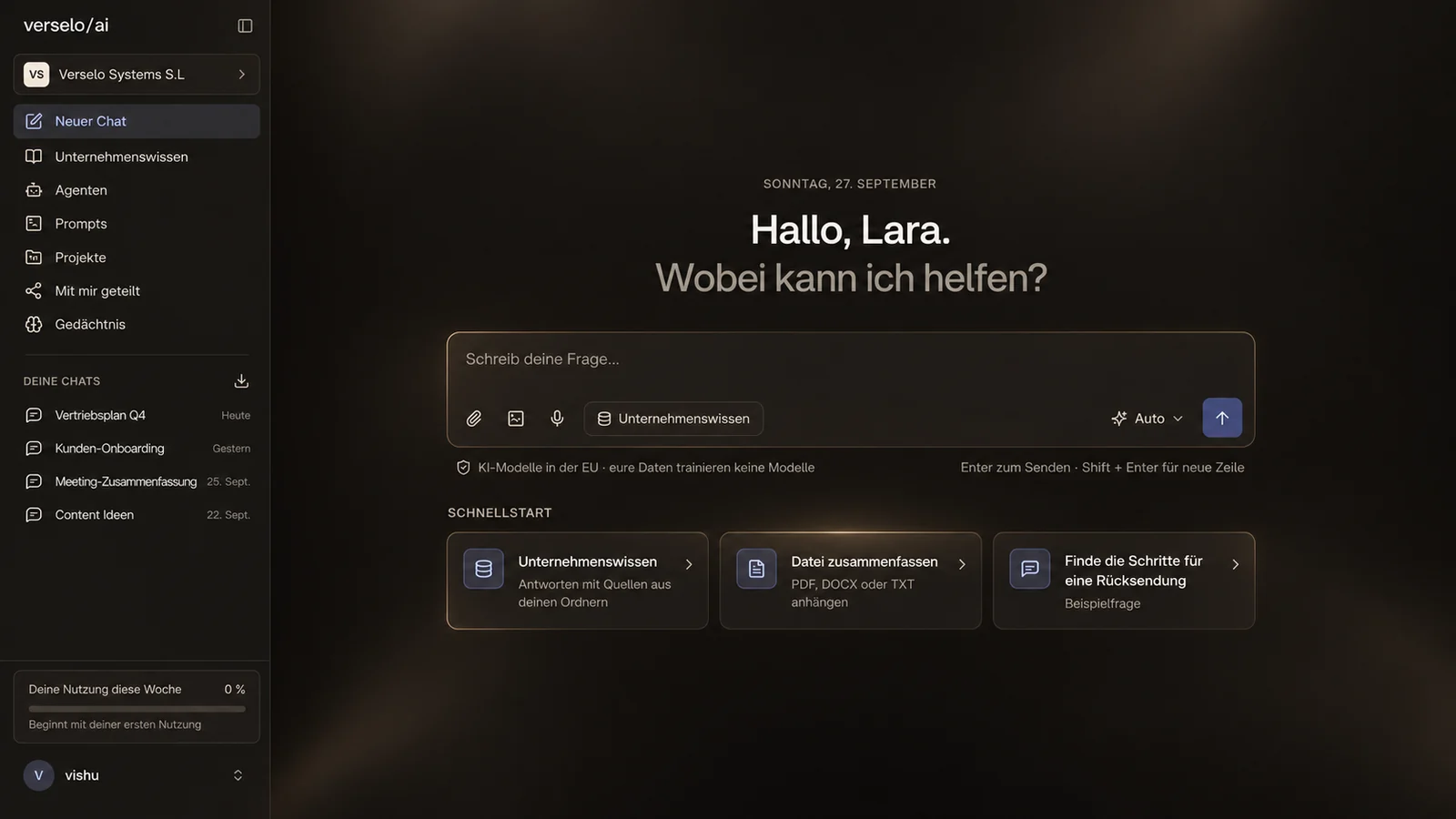
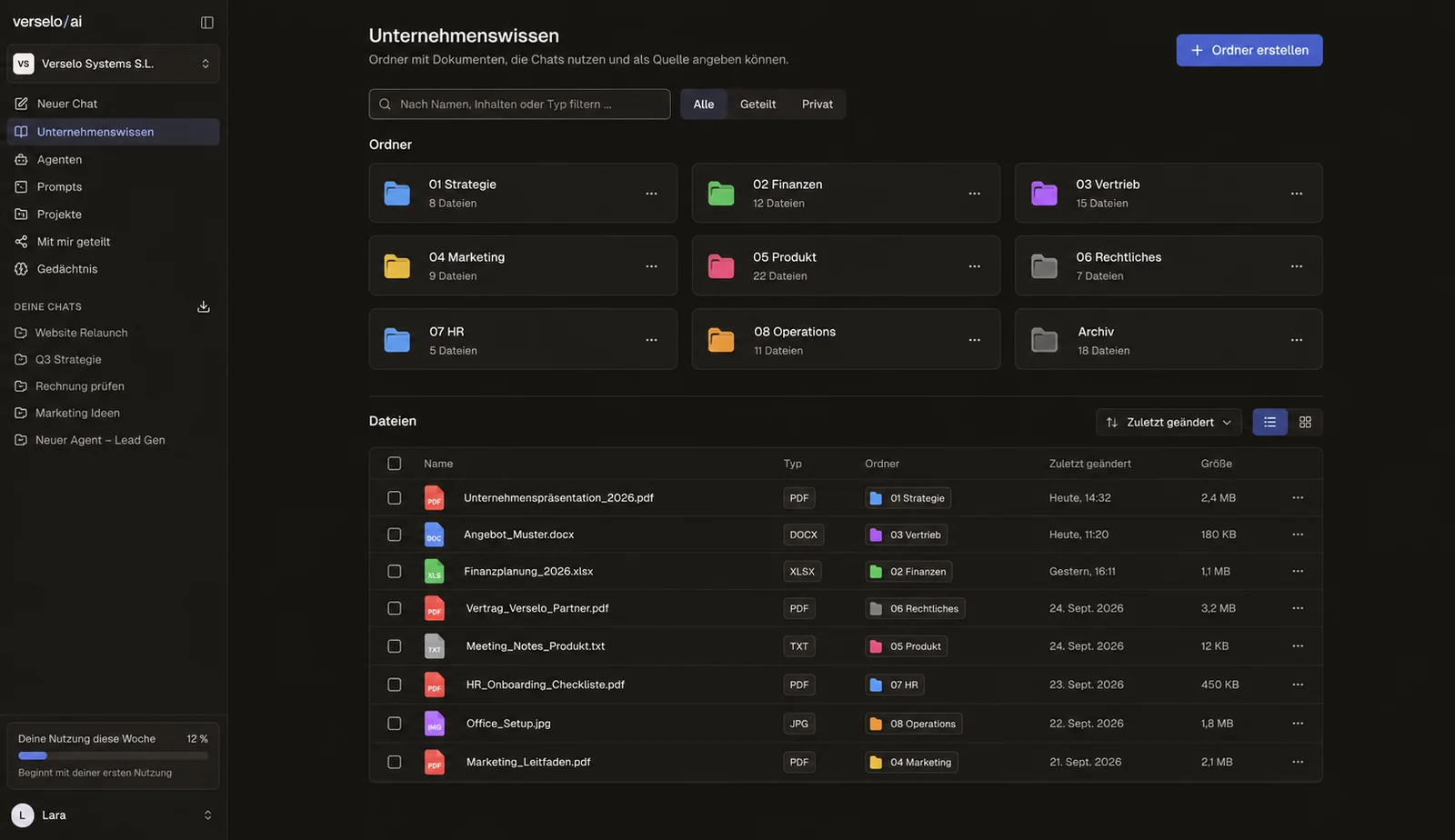
Company knowledge, chats, agents and projects in one platform. Access control down to the database, background processing and a dedicated release infrastructure.
PostgreSQL enforces workspace boundaries with Row-Level Security. Migrations and pgTAP tests check those rules directly against the data.
The web app, worker, parser, renderer and decoder each have a defined responsibility. Agents use configured sources and approvals. Releases use digest-pinned Docker images.
2,064 agent runs, 108 merged PRs, including 41 in the week of October 5 to 11, 2026, and 12,320 database assertions in the CI evidence. A dedicated engineering process carries the whole platform.
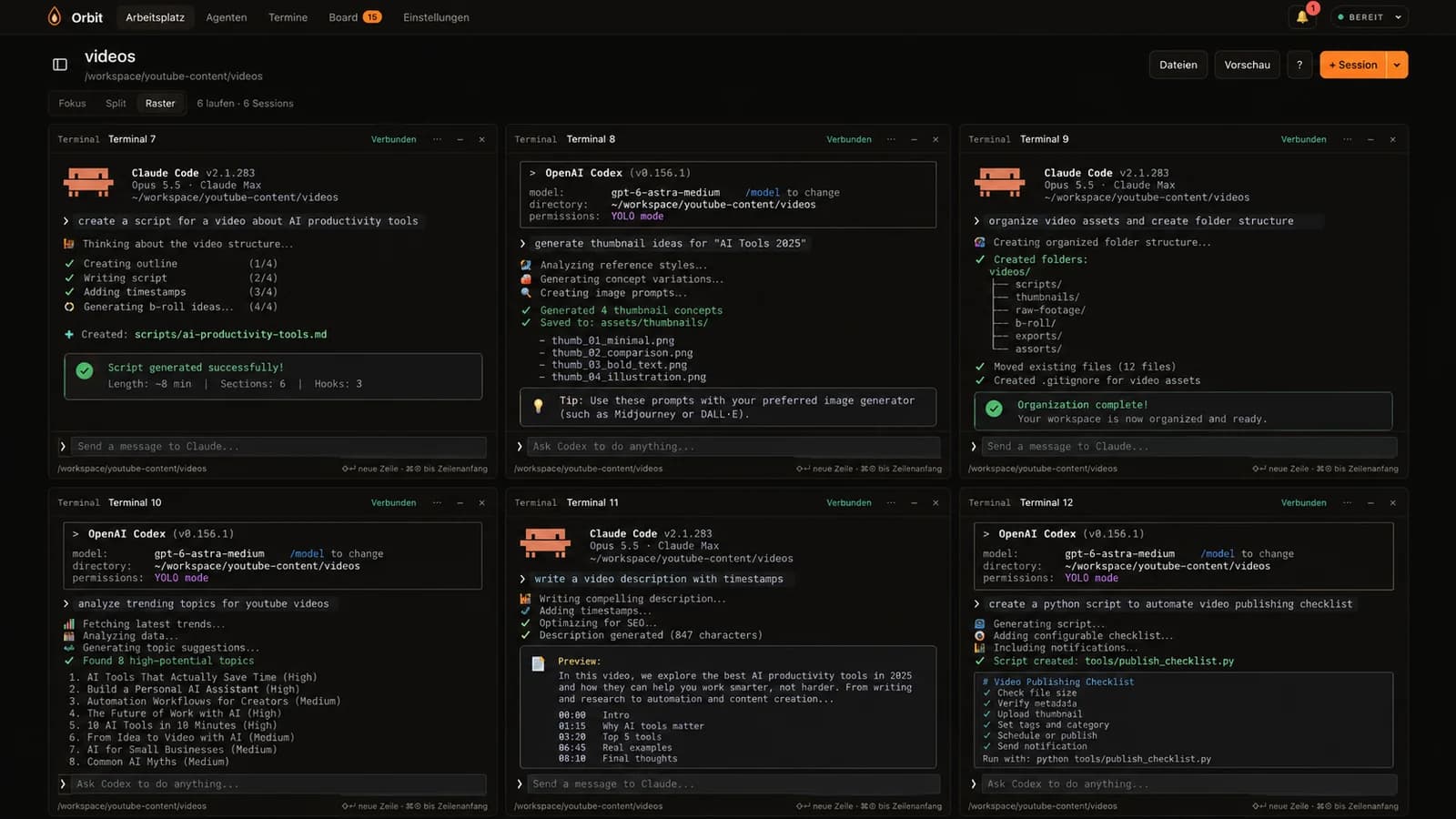
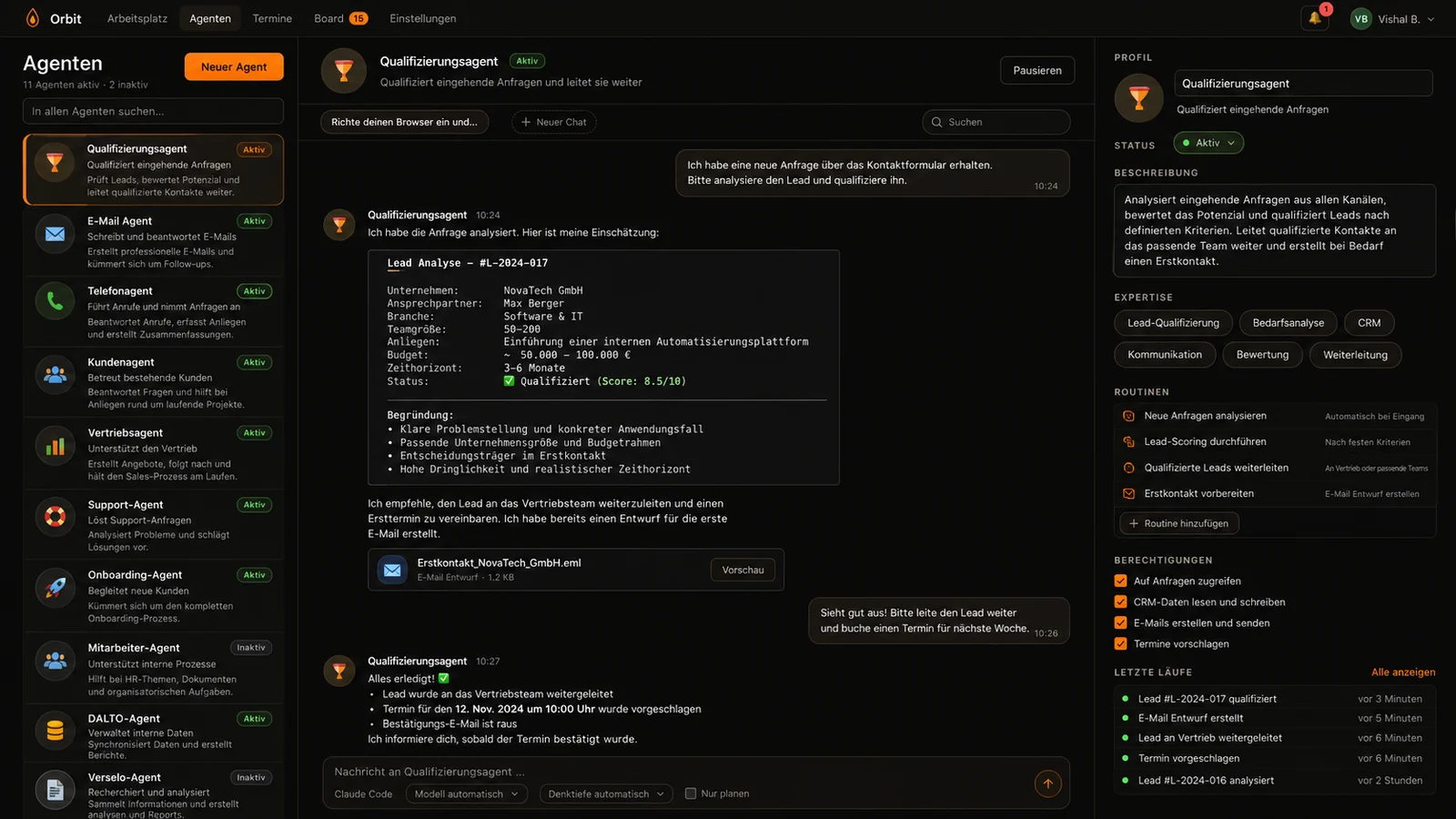
Claude Code, Codex, terminals, agents and approvals in one place. I built the tool I use to coordinate my own engineering.
Projects, terminal sessions, a file tree, editor and local preview share one workspace. Routines and approvals connect recurring tasks with controlled execution.
Core, Guardian, Host and UI have separate responsibilities. Tests use private data directories, ports and fixture executors. macOS checks launch the packaged desktop app and verify restart and import.
 Explore the product ↗
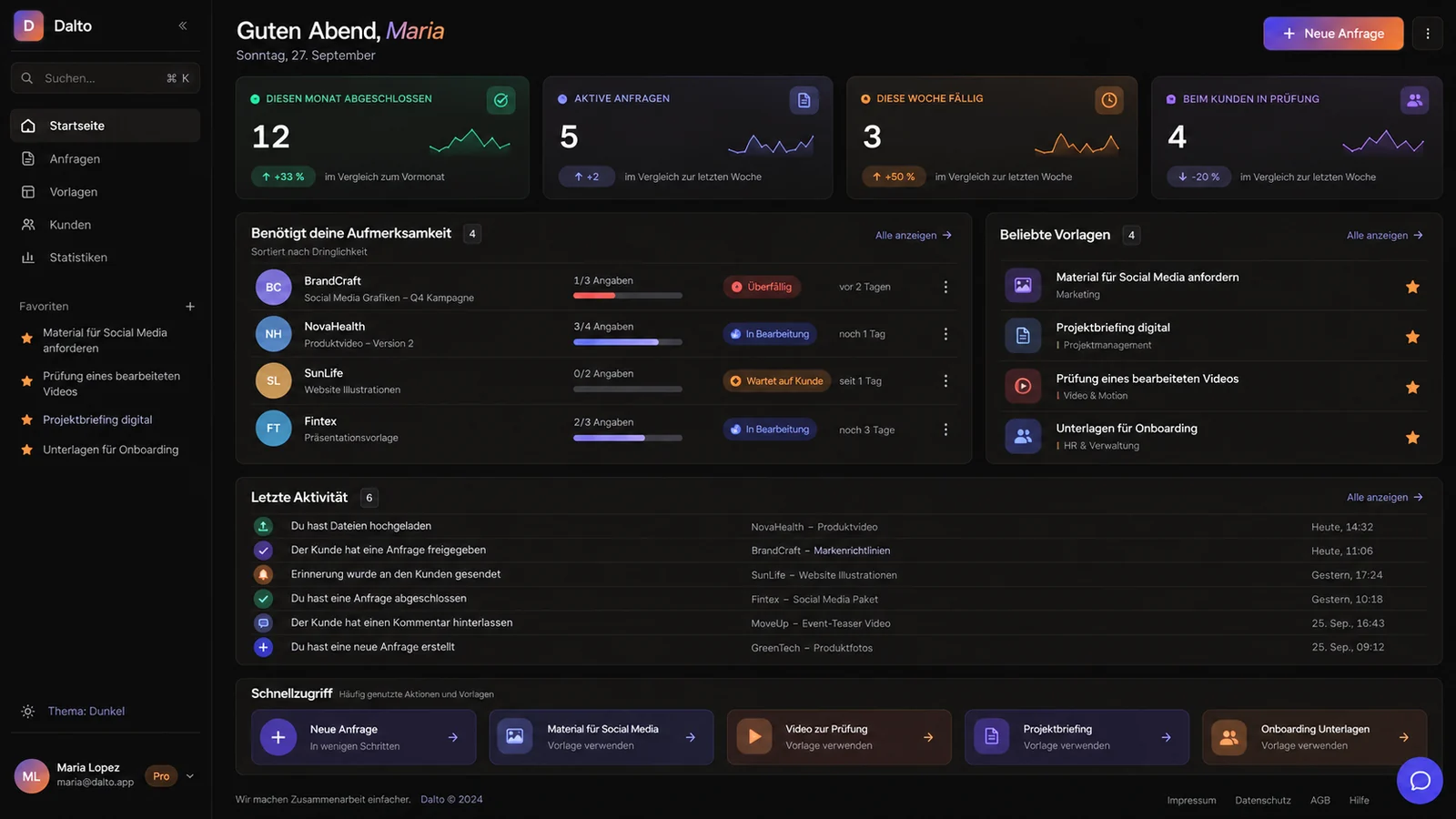
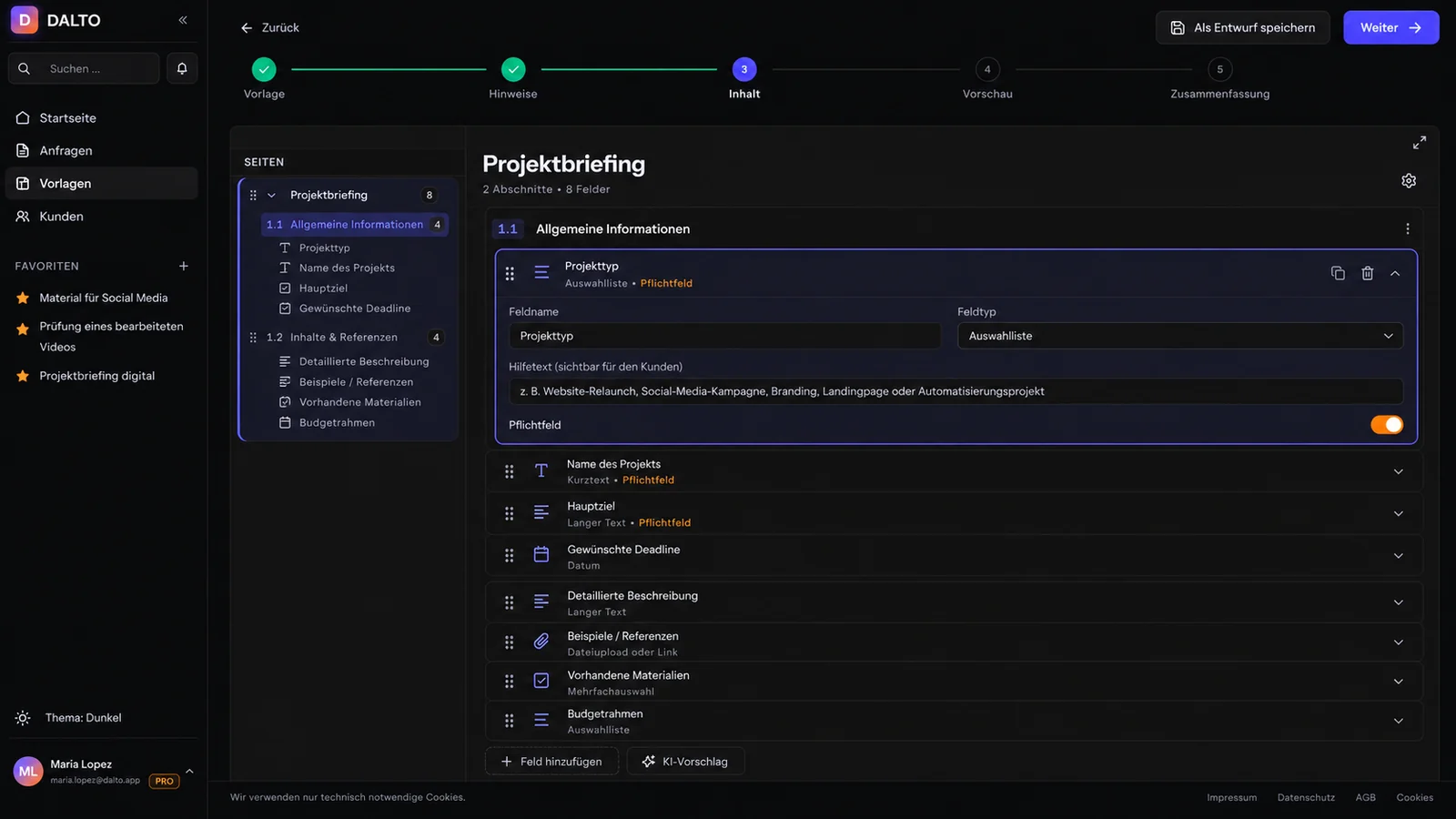
Templates, a client portal, uploads, deadlines and reminders. From a magic link to a complete file, with its own backend and infrastructure.
Professionals manage requests and templates. Clients complete steps through a magic link. Upload endpoints validate the token, request, file size and file type.
The reminder engine evaluates deadlines, missing steps and delivery history. Adapters handle email, Telegram and WhatsApp. Prisma migrations, Docker and GitHub Actions support development and delivery.
First-generation architecture
A dashboard, modular skills and agent runs with approvals. Built, deployed and still running at work.verselo.ai.
Every task has a state and per-result approvals. Markdown skills provide instructions to the Anthropic SDK runtime.
Each customer has a separate workspace instance and PostgreSQL database. Workspace IDs also constrain application-level data access.
I automate the work around the product too. My own agents connect research, persistent state and explicit handoffs.
Python agents research, write and produce previews. The poster processes approved content. SQLite retains state; a watchdog logs runs and reports failures.
A custom research agent combines public sources, model-assisted evaluation and the Twenty API. Structured records carry their source into the next stage.
My skills connect ffmpeg, Claude Code and HyperFrames. Editing, media processing and composition form a repeatable workflow, verified against the rendered result.
These rules come from running the system. They turn parallel sessions into an engineering team.
Separate branches can still modify the same database or occupy the same port. The test environment and port therefore belong in the assignment alongside the files.
Two verified changes can use the same migration number or overwrite a shared function. I retest the integrated code, including the interfaces between packages.
Types, tests, builds and browser flows run before a push. Expensive macOS and integration jobs belong on the final candidate. That saves debugging time on paid runners.
An assignment is not permission to delete. Destructive actions require my explicit approval for the specific target. Agents do not clean up other sessions, data or changes.
Looking for someone who connects architecture, implementation and agent orchestration? Let’s talk about your team and what you want to build next.

Claude Code tutorials on YouTube. My own skills. More than 200 people building alongside me in the Skool community.